John Henry Jackson came to Toronto to play football.
He had thought about returning home to Columbus, Ga. when his NCAA career at Indiana University ended in 1959, but Argos head coach Lou Agase called and invited him to spend 1960 in the CFL.
And he stayed in Toronto for love.
Get game analysis, stats, and more daily at 3pm
Here’s exactly what you’ll get.
- ✓ Canadian football's biggest stories
- ✓ Smart game analysis
- ✓ Every CFL transaction covered with exclusive insight
Argos teammate Dave Mann helped arranged a blind date with Anna Fitzsimmons, a friend of Mann’s girlfriend. That date led to marriage in 1963 and helped Jackson establish roots in Toronto. Over the following five decades Jackson, who died at age 80 of heart failure on Tuesday, became a justice of the peace, a father of two children, and a trail-blazing restaurateur best known for helping establish Toronto’s first soul food restaurant.
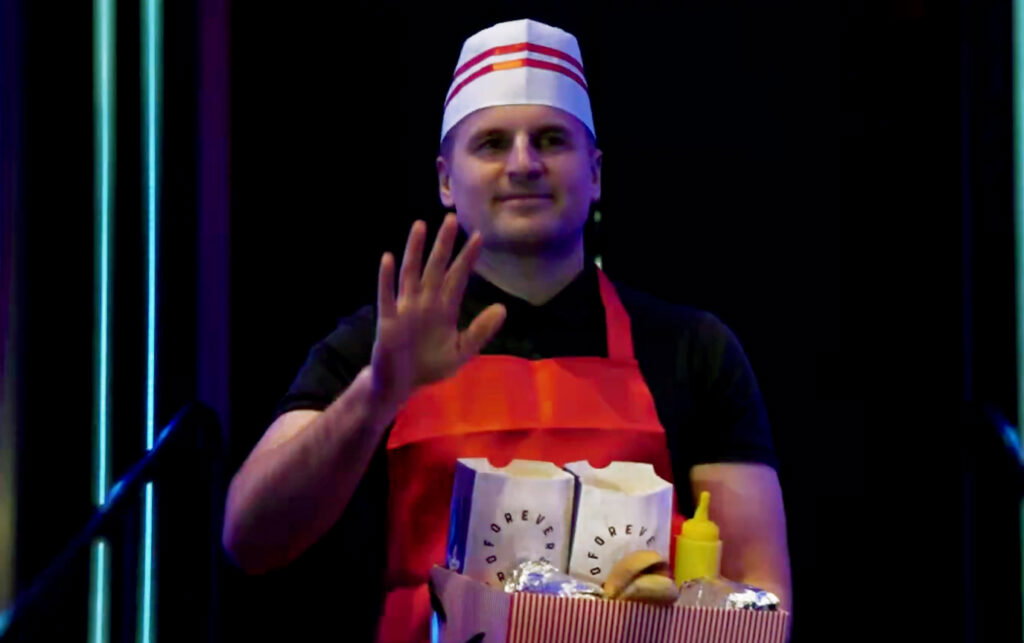
When famed jazz drummer Archie Alleyne and veteran restaurant owner Howard Matthews first approached Jackson with the idea of opening an eatery, they were thinking of a pizzeria. Instead, their brainstorming session spawned The Underground Railroad, which opened in 1969 on Bloor St. E, near Sherbourne St., and grew into an institution in Toronto’s Black community. Jackson co-owned the restaurant alongside Alleyene, Mann and Matthews, and saw it as his unique contribution to an increasingly multicultural city.
“He missed home cooking,” said Cosby Jackson, Jackson’s son. “He wanted a letter from home, and to be able to have some collard greens, some black-eyed peas and ham hocks and okra and all that good stuff.”
Born in 1938, Jackson spent his childhood in Columbus, then a fast-growing and still-segregated southern city. He shared a small house with nine relatives and starred in two sports at Spencer High School. As a baseball player he hit .325 his senior year and thought about pursuing a pro career.
But he also played a key role on a powerhouse Spencer football team that won two conference titles, and clinched a state championship when Jackson throw a 56-yard touchdown pass late in the final game. His play attracted attention from historically black colleges like Florida A&M, and from northern schools like Indiana, where Jackson eventually enrolled.
“Could be fine passer and good kicker with more experience,” said his bio in Indiana’s 1959 football media guide.
The Hoosiers ran a single-wing offence in which the quarterback took snaps but tailbacks did most of the passing. In 1959 Jackson lined up at tailback and completed 24 of 55 passes for 478 yards, leading his team in each category. His six passing touchdowns ranked second in the Big Ten.
Beyond those numbers, Jackson formed part of a cohort of African-American players slowly changing the racial makeup of football in the Big Ten, and other conferences outside the south. That season Jackson faced future Argo Johnny Counts, who starred at the University of Illinois, and a Northwestern team featuring African-American standouts Ron Burton, Irv Cross and Elbert Kimbrough.
“That seemed to be a turning point,” Cosby Jackson said. “More and more Black kids getting a chance to play at predominantly big white schools. It’s pretty historical.”
Jackson’s Argos career was brief — he played one game in 1960, completing two of four pass attempts for eight yards.
But by then he was already in love with both Anna, whom he would marry in 1963, and with Toronto. He landed a day job in ad sales at the old Toronto Telegram newspaper, became a Canadian citizen in 1965, and eventually became starting quarterback for the Toronto Rifles of the Continental Football League.
An October 1965 Continental League Game brought Jackson to Wheeling W. Va., where he completed the pre-game warm-up but just before kickoff was confronted by FBI agents, who arrested him for allegedly dodging the U.S. military draft. The owner of Charleston’s team quickly paid Jackson’s $1,000 bail, and Jackson returned to the stadium in time to see the fourth quarter of a 13-3 Rifles victory. High-profile supporters — including the Telegram, and lawyers from the Rifles and the Continental League — lined up to help him fight a court case they found disingenuous.
For his part, Jackson affirmed his right to freedom and dignity on either side of the border.
“My home is Toronto now (but) I would like to be able to travel unrestricted throughout the States,” he told reporters in October 1965. “If there was a chance I would be convicted of something, I wouldn’t go. I don’t want to be treated like a dog.”
By the spring of 1966 prosecutors had dropped the charges, and three years later Jackson teamed up with Mann, Alleyne and Matthews to open the Underground Railroad.
The name references the network of people who helped slaves in the U.S. south escape to freedom in northern states and in Canada. Jackson’s son, Cosby, says the title was natural given the restaurant’s role as a beacon of African-American culture in Toronto, and the way fugitive slaves charted the path his family later followed.
“It’s a big part of our family identity,” Cosby Jackson said. “Here we are in Canada, and this is the end of the road in the Underground Railroad. It seemed appropriate to name it that. It’s soul food, a Black-owned and run restaurant with a theme of the history of Black America.”
The restaurant — which moved from Bloor St. E to King St. E in 1973 — quickly became a destination for locals, to whom African-American cuisine was a novelty, and to high-profile Black Americans passing through Toronto. It put Jackson in contact with celebrities like Bill Cosby, after whom he named his son, as well athletes of all races. African-American Blue Jays like Jesse Barfield and Willie Upshaw frequented the restaurant, as did Yankees’ second baseman Willie Randolph, and Dave Winfield.
Even Boston Red Sox third baseman Wade Boggs would stop by on game days.
“Very superstitious,” Jackson told the Star’s George Gamester in 1987. “Eats nothing but chicken.”
But by then steadily rising costs had been eroding the restaurant’s profits for years. Jackson told the Star in a 1981 interview that the Underground Railroad was roughly $500,000 in debt and had gone into receivership. The restaurant closed for good in 1990 and Jackson moved on to manage The Meteor restaurant on Blue Jays Way, and later ran Greztky’s, which took over the site.
“I can only imagine how tough that was for him,” Cosby Jackson said. “He had to eat his pride and go work for someone else … But I have so much admiration for him because he did what he had to do. He swallowed his pride and got up every day.”
After leaving the restaurant business, Jackson spent nearly two decades as a justice of the peace, in Brampton and at Old City Hall.
Jackson is survived by his wife, Anna Jackson; two children, Cosby and Sara Jackson-Knowles; grandchildren Jarrett and Adanna; and great-grandchildren Denzel, Eli, Kendrick and Olivia.
The family will hold a small, private funeral service Saturday.
Sign up for the 3DownNation daily newsletter
B.C. Lions
3DownNation CFL power rankings:
Calgary Stampeders
Calgary Stampeders release Montréal product Kaylyn St-Cyr, nine others
Saskatchewan Roughriders
Jack Coan, Trevor Harris compete to outwork each other with Saskatchewan Roughriders
Saskatchewan Roughriders
Saskatchewan Roughriders sign undrafted Canadian DB Trae Tomlinson
Winnipeg Blue Bombers
Mike O’Shea defends Willie Jefferson’s declining sack numbers
Hamilton Tiger-Cats
Matthew Shiltz inks one-day contract to retire with Hamilton Tiger-Cats
Toronto Argonauts
Toronto Argonauts cut incumbent starter Spencer Brown, nine others
Toronto Argonauts
Toronto Argonauts sign Alex Teubner after release from B.C.

Ottawa Redblacks
Ottawa Sooners building star-studded CFL coaching staff in CJFL
Montreal Alouettes
Veteran CFL quarterback Dustin Crum chose Montreal Alouettes over B.C. Lions
Winnipeg Blue Bombers
The CFL’s highest-paid running backs and fullbacks in 2026
B.C. Lions
The CFL’s highest-paid receivers in 2026
Edmonton Elks
The CFL’s highest-paid offensive linemen in 2026
Winnipeg Blue Bombers
Five position battles to watch in Winnipeg Blue Bombers training camp
Toronto Argonauts
Syracuse, Wake Forest to play at BMO Field in Toronto in 2027
B.C. Lions
The CFL’s 30 highest-paid players for 2026

Edmonton Elks
The CFL’s highest-paid defensive backs in 2026
Calgary Stampeders
Vernon Adams Jr. signs contract extension with Calgary Stampeders

Winnipeg Blue Bombers
CFL rookie, training camp vet Taylor Elgersma ready to battle for Winnipeg Blue Bombers
Toronto Argonauts
Toronto Argonauts release QB Max Duggan
Ottawa Redblacks
Ottawa Redblacks 2026 CFL training camp primer (offence)

Winnipeg Blue Bombers
Brady Oliveira wants to play 10 CFL seasons, retire as a Winnipeg Blue Bomber
Saskatchewan Roughriders
Position battles to watch in Saskatchewan Roughriders 2026 CFL training camp
Ottawa Redblacks
The CFL’s highest-paid linebackers in 2026
Saskatchewan Roughriders
Saskatchewan Roughriders sign Regina native Ryder Varga