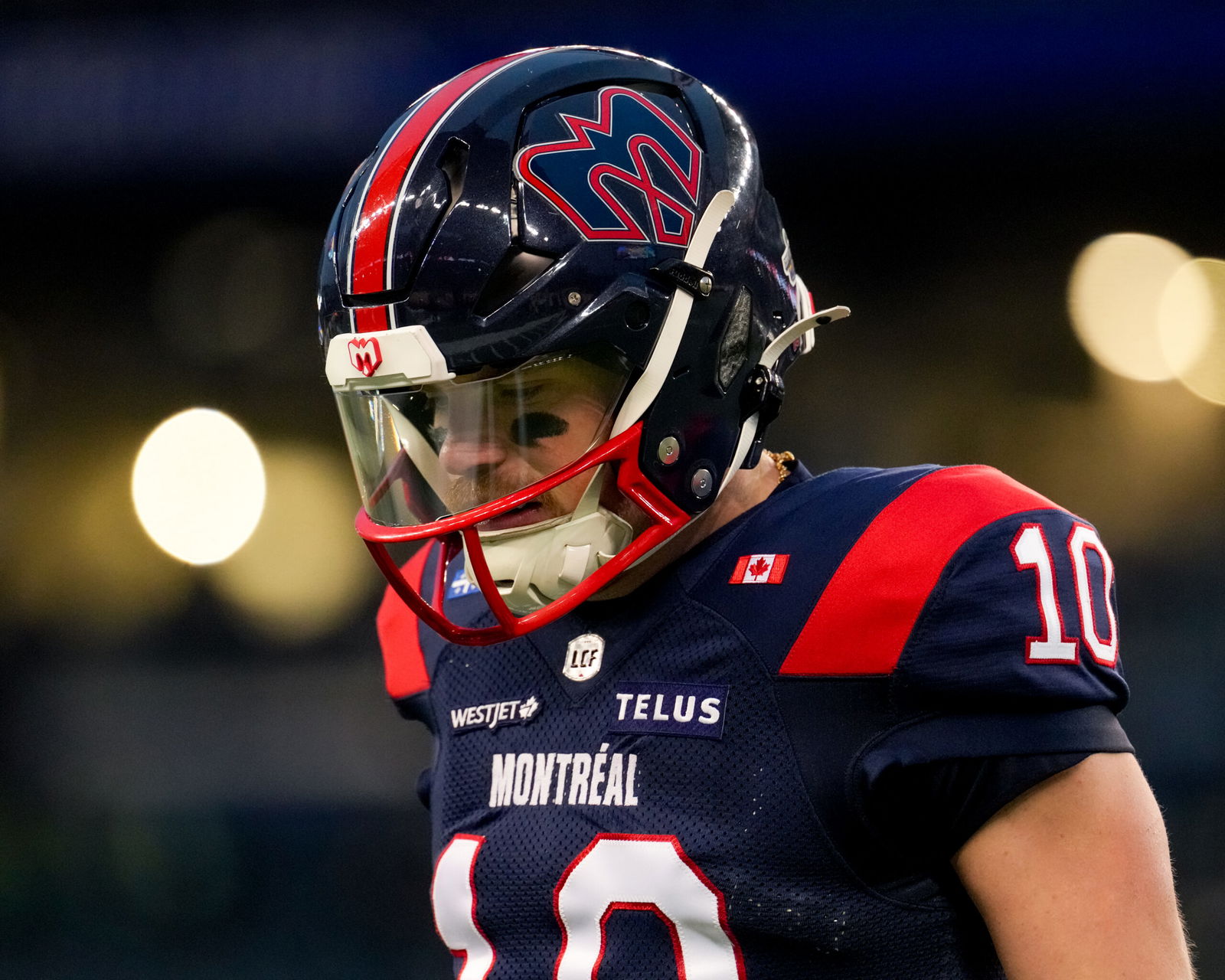
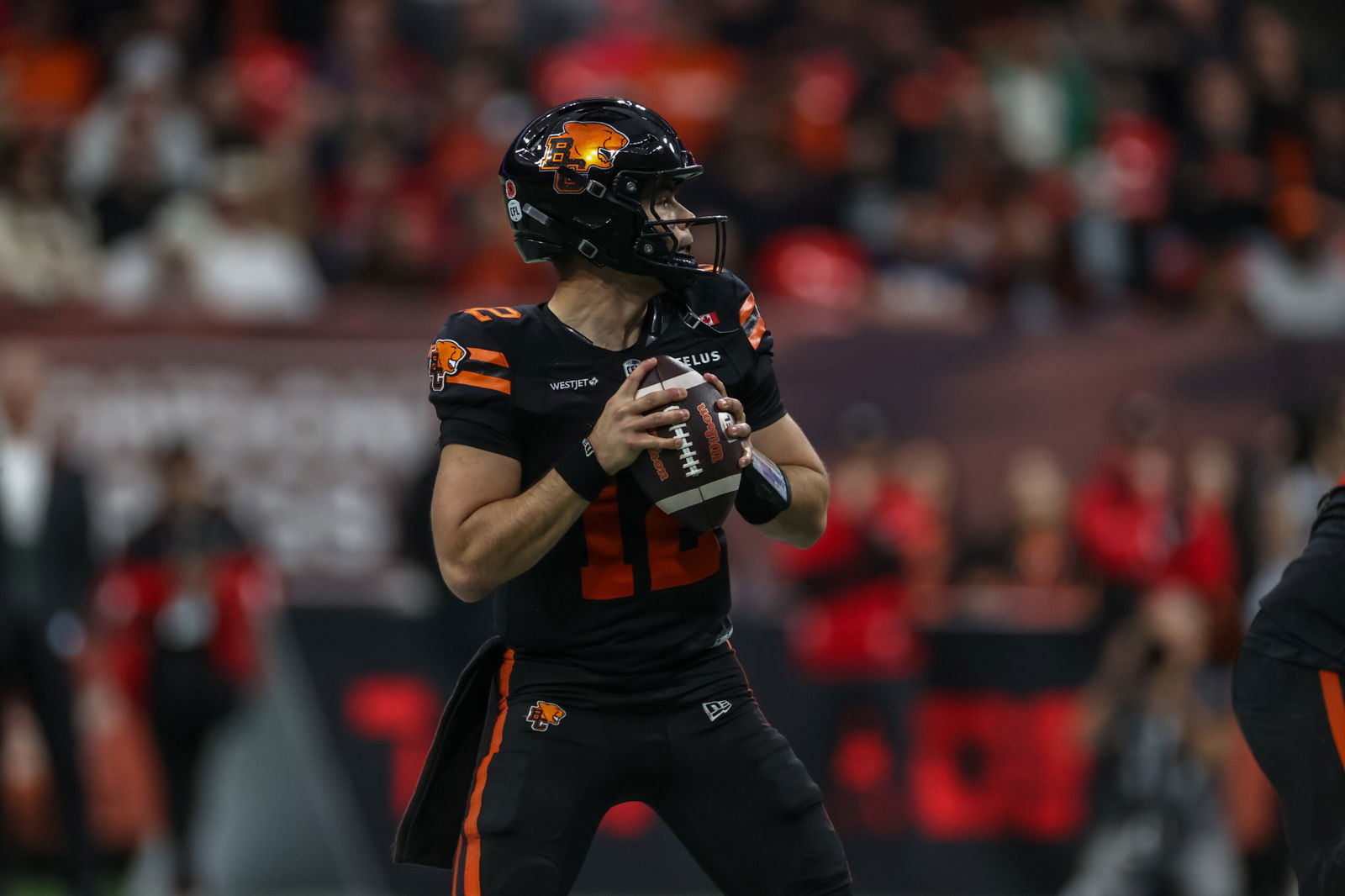
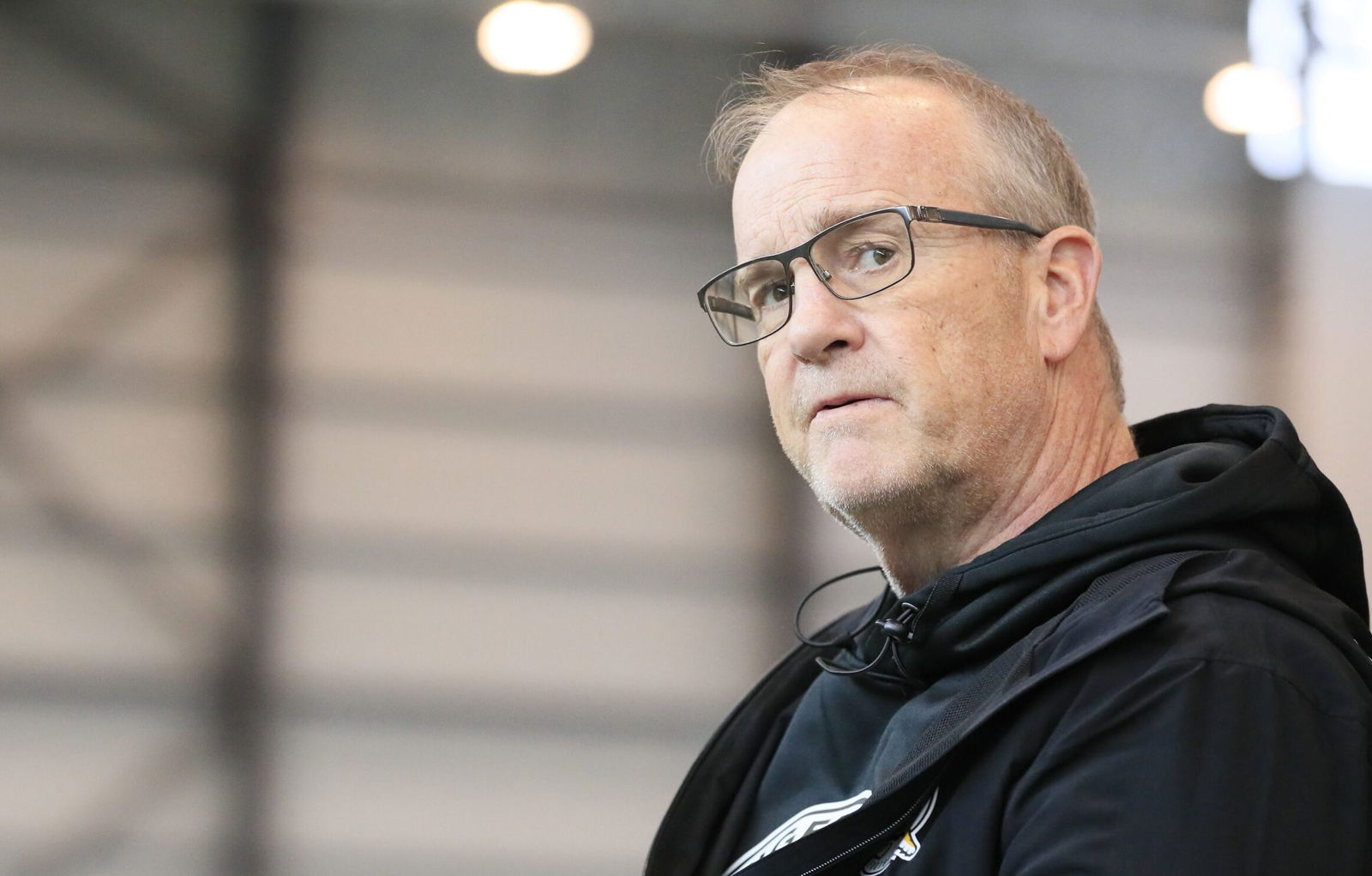
Victim-blaming may have gone out of style in the 2010s like jeggings, planking, and dystopian teen fiction, but Montreal Alouettes’ head coach Jason Maas believes his quarterback bears personal responsibility for the hamstring injury that limited him in the Grey Cup.
“This was, in my opinion, a direct result of over-training, and that’s what a lot of young guys will do. They’ll do more than they ever thought they could do just to be ready, and they feel like the more they do, the more ready they’re going to be,” Maas told the media when asked about Davis Alexander’s health.
“Sometimes rest is best, and you’ve got to be able to put those things in there, too. Also, a little bit of it is luck. You’re working that hard, and all of a sudden, you get a little tweak. You think it’s nothing, and you compound it. Camp’s getting close, and you want to keep being ready, and it all happens that way. So for Davis, that’s, in my opinion, what it was. It’s a lot of working a little too much because the expectations are high, and his expectations are high.”
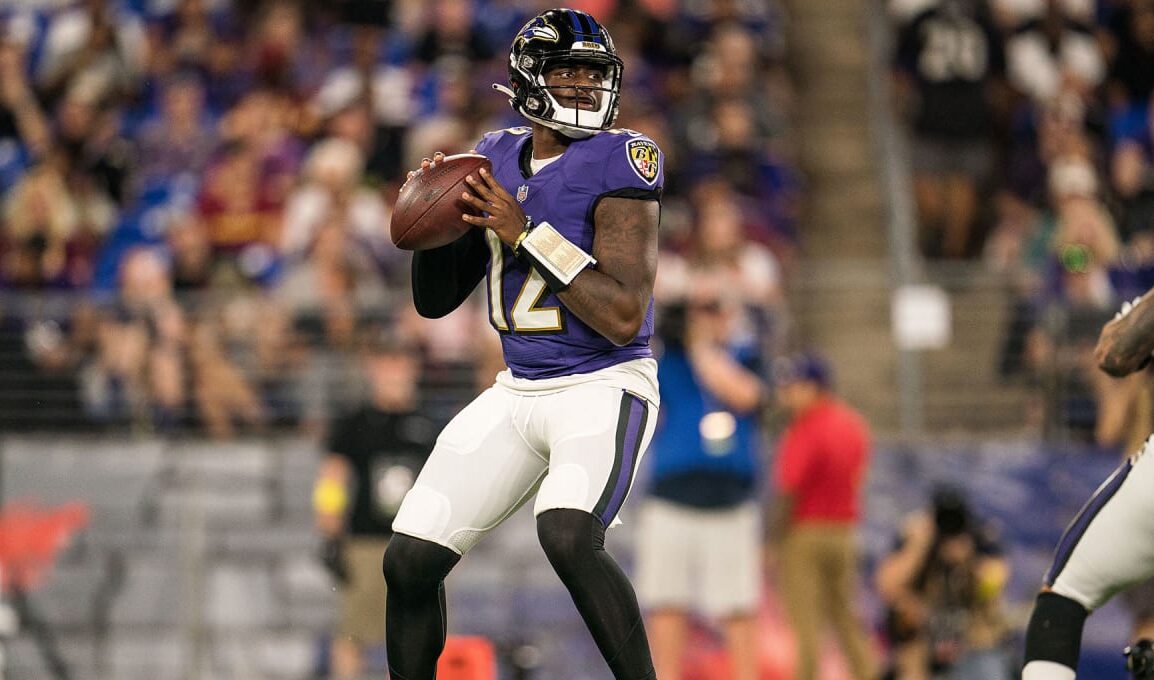
The Alouettes lost the 112th Grey Cup to the Saskatchewan Roughriders by a score of 25-17 at Princess Auto Stadium in Winnipeg. Alexander was limited in practice leading up to the game due to the nagging injury he had re-aggravated in the East Final and showed signs of limitation throughout. Despite a late surge, he finished 22-of-34 passing for 284 yards and three interceptions, producing no touchdowns while adding just 14 yards on the ground.
The 27-year-old revealed after the game that he had been dealing with a Grade 3c hamstring tear on his left leg — the most severe type of tear you can suffer without the muscle coming off the bone. The injury initially occurred in April, while the quarterback was performing curve sprints and flared up multiple times throughout the season, limiting him to just seven regular-season starts.
Known for his gruelling workout routines, which include deadlifting up to 500 pounds, Alexander acknowledged that he may have pushed his body too far.
“I think that’s been talked about a little bit. Maybe I trained too hard, I don’t know. I didn’t really believe that that was a thing, I guess, until now. It’ll be something that I’ll definitely monitor. We’ll have to work that out as a team,” he said, adding that his workouts already include Pilates and flexibility exercises to maintain his health.
“Part of me thinks it’s just a freak injury that happened. Maybe it was from overwork and all that, and then I just never let it recover, because it did happen in April, and we dealt with it the whole year. Time — it just needs time.”
Alexander is stockier and more muscular than your typical quarterback, a testament to his gym rat reputation. However, some have raised concerns as to whether the five-foot-11, 210-pound passer will be able to enjoy sustained success utilizing his current formula, as recent examples have shown that longevity at the position is tied to proper body maintenance and not raw power.
Maas doesn’t want the Portland State product to change his physique or his mentality. He just wants to see his offseason program tweaked so he doesn’t tweak himself.
“Is he too bulky to play the position? No. The way he played this year, the success he had playing, is a direct result of the training he has and what he put into the offseason. But whenever you’re tasked with being a franchise quarterback for the first time, human nature is to do too much,” Maas said.
“When we look at the offseason coming up and compare it to last, that’s what we’re going to do with him. We’ll sit down with him, we’ll look at everything he did, and I think he’ll have learned the things that worked and the things that maybe we can look at doing a little bit differently.”
Alexander, who was named the Alouettes’ starter last offseason after the club elected to move on from former Grey Cup MVP Cody Fajardo, took all the reps in training camps despite his injury. He pulled the hamstring again in a Week 3 win over Edmonton and was forced to sit out three games. He would last just 60 minutes after making his return in Week 7 against Toronto, pulling up lame on the game-winning touchdown run. That time, he was relegated to the sideline for nine weeks.
The first-time franchise pivot acknowledged he probably should have laid off his leg before the season began to let it fully heal, but unwisely pushed through out of a desire to prove himself.
“Selfishly, I’d say yeah. But I also don’t think we knew how bad the injury was, or even what the injury was at that point, because I was able to do training camp, and I did feel pretty good out there,” he said. “I did play the three games before I got hurt. I think maybe a little selfishly, you’ve been named the franchise guy now, and you gotta come to camp ready and be ready to go.”
When he was on the field, Alexander proved that the Alouettes made the correct decision by betting on him, throwing for 2,204 yards, 10 touchdowns, and just three interceptions. His energetic playstyle and fiery trash talk were the driving force behind two playoff victories, and the Grey Cup stands as his only loss as a starter in the CFL.
How Montreal might have fared in the title game if their quarterback were fully healthy will forever remain a “what if,” but Maas does not begrudge Alexander for the way he handled his body.
“He wanted to be there for his team, and Montreal, and the organization that had given him an opportunity. There’s nothing wrong with that. Now it’s just time to learn from it and get better. I know he’s going to do everything in his power to be back 100 percent this training camp,” he said.
“Davis will do his part in that, I assure you.”